
Trace a Short Pump Street
Short Pump sits in Henrico County as an unincorporated community. No city clerk holds the records here. Address questions go to county custodians instead. Start with the property address and its parcel identifiers, since those numbers tie everything together. An assessment entry responds to the same identifiers. A map layer responds to them too. So does a recorded instrument. Each one answers a different question, though. The assessor's record shows ownership details and a physical location. A recorded deed carries the legal transaction that placed a party in the chain of title.
- Enter the street number, prefix, street name, and unit in Henrico Property Search. Save the GPIN or PID, physical location, and any legal-description wording shown.
- Open the parcel in the Henrico GIS Viewer. Note the lot, subdivision, condo phase, and parcel shape before treating a nearby label as part of the same property.
- Use the GPIN and legal description to inspect the Clerk's land-record route. Compare the current owner or grantee with the prior grantor one recorded instrument at a time.
- For a supplied person's own election question, use the Virginia Citizen Portal to check registration information or a polling assignment. It is not an open street roster.
- For an older household question, ask the Richmond Room about a reverse or criss-cross directory, then preserve the printed address and year exactly as shown.
That order guards against a common mistake. A tax mailing address, a map label, or a residents directory listing is never proof of current occupancy. The sequence also protects the GPIN. That is the durable link between the modern parcel system and related records. Note: Record your search date because assessment, map, and election details can change after a lookup is finished.
Short Pump Street Search Fields
The main Henrico Property Search form handles parcel and address work. Visible fields include GPIN, PID, street number, prefix, street name, unit, use code, and description. Sort controls sit alongside them. No owner-name field appears on the primary form. County material states that the database publishes ownership records, assessed value, physical characteristics, and sales information. That promise does not guarantee which fields surface in every result. Lead with an address or identifier. Then verify any name shown in a detail record against the Clerk's instrument.
| Henrico field | Format | Required | Street-search use |
|---|---|---|---|
| GPIN | Text | No | Exact geographic parcel identifier |
| PID | Text | No | Property or parcel ID route |
| Street # | Text | No | Numeric address component |
| Prefix and Street Name | Text | No | Use the county spelling and directional prefix |
| Unit | Text | No | Separate condo or apartment component |
| Use Code and Description | Dropdown or text | No | Portal options were not exposed in the text capture |
Missing results call for small adjustments. Drop unit punctuation and test a prefix. You can also retry with a GPIN or PID copied from another county record. The Finance online-data notice labels the database a reference source rather than an official record. Henrico reassesses every year. Save what the screen displayed rather than expecting a later card to match word for word.
See the recorded source view from the Henrico Property Search before using a parcel identifier. 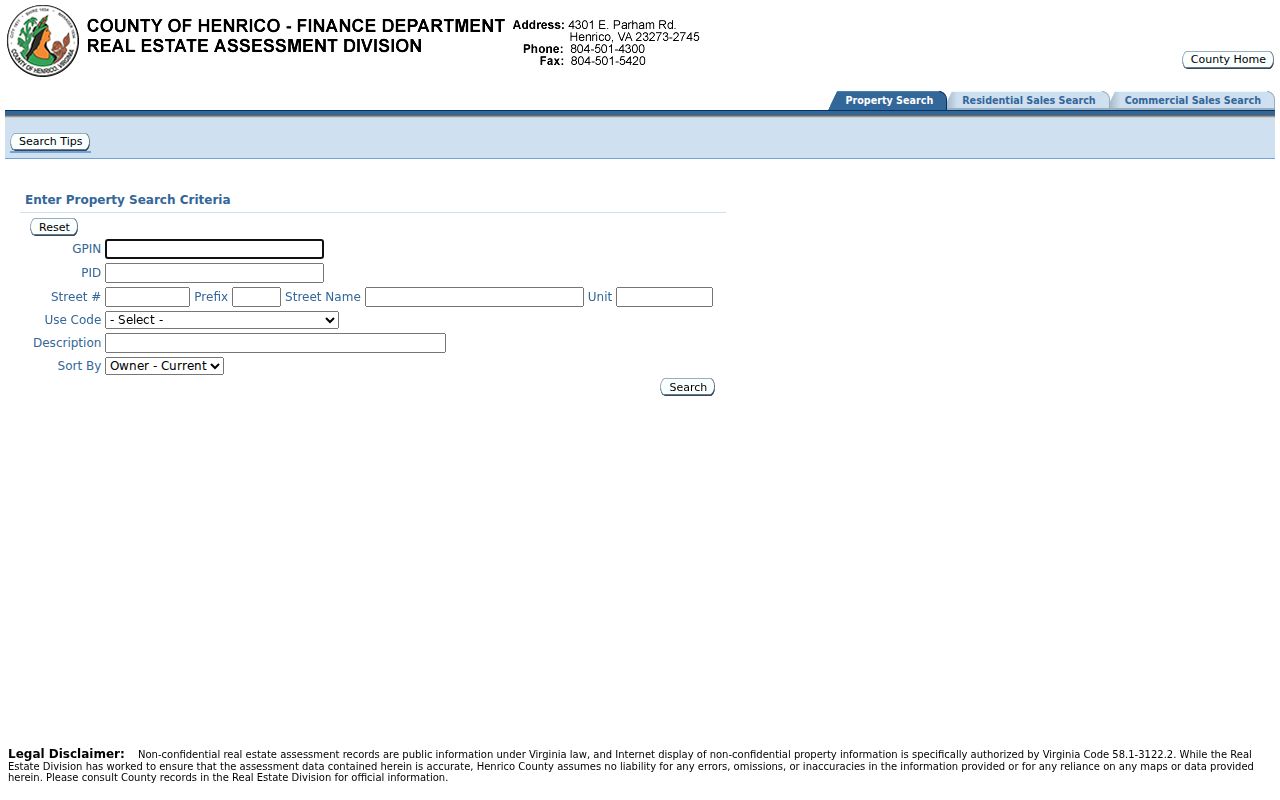 The address, GPIN, and street-field controls provide a useful handoff to the map and deed search, but the image does not confirm an occupant.
Short Pump Street Address Types
Henrico assessment records draw a clear line between two addresses. The situs is where the parcel actually sits. The mailing address is simply where a tax bill or owner notice gets delivered. That line matters for anyone using the Short Pump residents directory, because a mailed notice can point to an estate, a trust, a lender, or anyone else with no tie to the parcel itself. Multi-unit parcels complicate things further. One property record there can carry several unit numbers and more than one mailing convention, so a street directory entry built from assessment data needs those labels kept straight.
- Parcel
- A defined piece of land in the county's property system, commonly tied to a GPIN or PID.
- Situs address
- The physical location assigned to a parcel for assessment and mapping purposes.
- Plat
- A recorded map that can show a subdivision, lot, boundary, or parcel change referenced by a deed.
- Criss-cross directory
- An address-first directory format that may list a householder or telephone notation by street and number.
A Short Pump street directory works best when those labels stay separate in your notes. A tax bill, a property card, a recorded deed, a permit, and a map all describe the same land. Yet each answers a different question. Before drawing any ownership conclusion, set the county reference record beside the recorded instrument itself. A mailing line alone settles nothing.
Map Short Pump Street Parcels
Typing an address only gets you so far. Henrico's Real Estate MapServer turns it into physical context. It publishes layers for Tax Parcels, Condos, Condo Boundaries, Condo Phases, Subdivisions, Subdivision Boundaries, Lots, Subdivision Sections, and Appraisal Areas. Run Find or an address route first. Then Identify the parcel it lands on. The service also documents query, legend, domain, and map-export functions. It states a selection limit of 2,000 records. It publishes no coverage date.
Treat the map as reference-only. Its lines are not a survey, and they do not settle a legal boundary. Even so, the viewer answers a common street directory puzzle: why one search returns several records. A subdivision phase may carry a near-identical name. A tract may have been recombined. Or an older deed may list a road name that no longer matches today's delivery label. When you take a note, record the layer name and date. For a closer check on any map result, the narrower Tax Parcels service offers identify and query routes.
Short Pump Street Records
Address-keyed sources make a workable Short Pump street directory. None of them lists every person on a road. Property and GIS systems establish parcel identity. Deeds and plats build a recorded transaction trail. Permit and inspection files can date work at a property. Directories, census material, and newspapers add historical household evidence. The table separates each source's purpose from its access route. It includes the counter and archive paths worth knowing when a web result runs dry.
| Address evidence | Key | What it can show | Access route |
|---|---|---|---|
| Assessment record | GPIN, PID, street fields | Published ownership, mailing and situs data, values, physical details, sales data | Free property portal, reference-only |
| GIS parcel layer | Address, map, GPIN | Parcel geometry, lot, subdivision, condo, appraisal area | Viewer, REST query, export, or data request |
| Deed or plat | Names, book/page, instrument | Parties, date, legal description, PIN, plat reference | Secure route, record room, mail copies, LVA microfilm |
| Permit or inspection | Address, permit number | Permit type, status, inspection, certificate, construction details | Build Henrico or paper request |
| Historic directory | Printed street or location | Household or business clues and address wording | Richmond Room, library, archive, or digitized collection |
Street records in Short Pump draw on narrower sources than most people expect. Voter data is a case in point. Virginia law restricts bulk voter-list access through a Statement of Responsibility process, so a residents directory built from voter rolls is simply not available to the public. The citizen portal handles only your own registration and polling questions, and the Henrico Registrar can help if that portal gives you trouble. Treat any precinct or voter record as a single person's entry, never as proof of who occupies a street.
Check Short Pump Street Permit Eras
Building files carry dates and property details. They can enrich a Short Pump street directory search. Henrico Building Construction and Inspections points permit seekers to Build Henrico. That system handles permits, inspections, certificates, and status functions. Older records stay in the Legacy system. Anything from before August 30, 2021 will not surface on the current Build Henrico path. That date is only a routing boundary. It does not mean a property lacked an earlier file.
When the online route stalls, the county's Building Records Request form is the next step. It asks for an address or permit number. It can yield plans, permit copies, inspection reports, and certificates of occupancy. It also returns construction dates and open-permit information. Expect about five days, with paper-copy rates listed by page size. The form's office-use fields hold prior names, GPIN, and map or file references. Those details can help locate a historic property file.
The Henrico land-record instructions document the Clerk's recording and copy route. 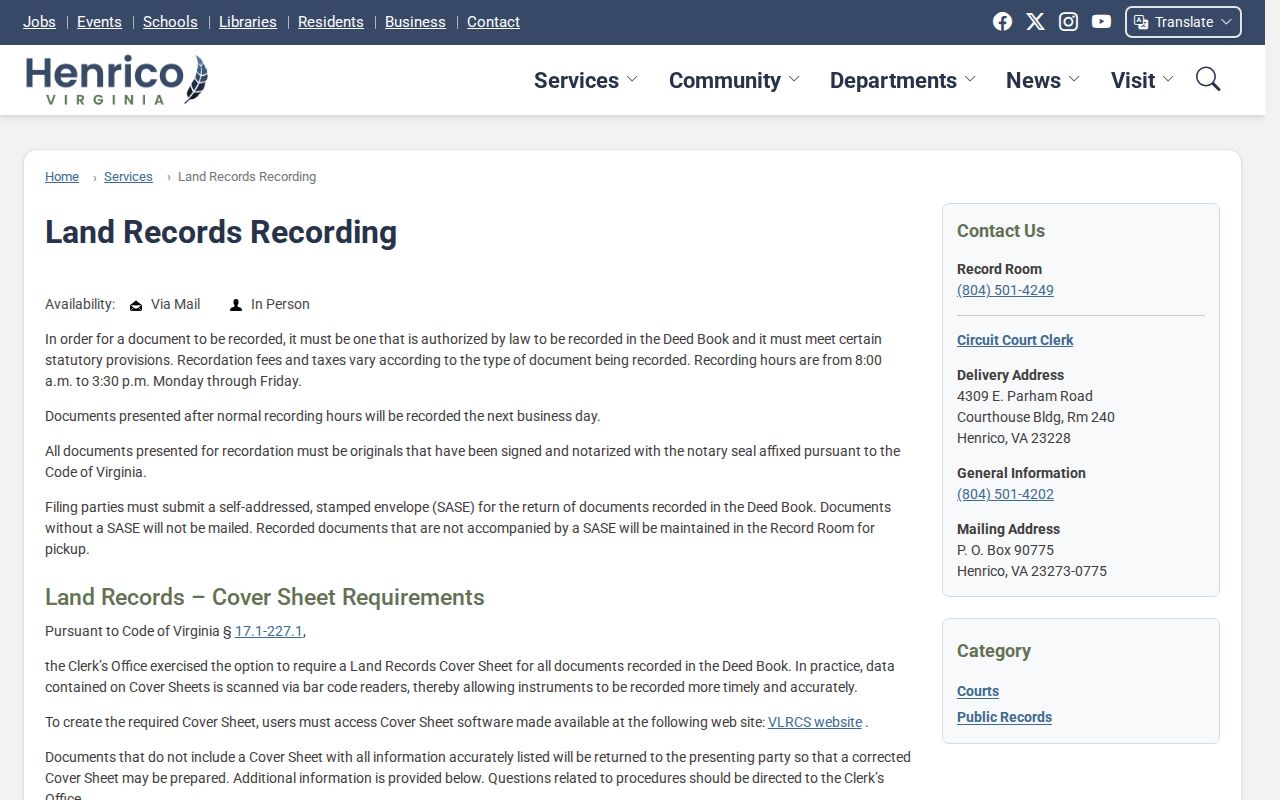 A permit file or land-record instruction can connect an address to a documented transaction or project, but neither establishes every person associated with the street.
Note: Short Pump treats a code complaint as a lead only, since the county describes a process that can end in voluntary correction or later action.
The record is a starting point. Confirm any status with the county before drawing conclusions.
Walk a Short Pump Street Deed Chain
Henrico's Circuit Court Clerk keeps deeds, plats, wills, judgments, probate material, and other circuit records. A deed chain starts with a few anchors. Gather the current GPIN, the subdivision or lot, and the legal description. Then search the land-record index for the apparent current grantee and likely grantor. Each link holds clues. Note the document type and the recording date. Also note the instrument number or book and page, the parties, the parcel reference, and the plat. Common names, family transfers, estates, trusts, and corporations all invite false matches. The legal description anchors every step of a resident lookup by parcel.
Work backward. Take the prior grantor from one deed. Then hunt that party as grantee in the earlier period. A deed may cite a plat book or page. Pull the plat before concluding a parcel vanished. Henrico reports digitized land records back to 1947. Earlier material lives in the public record room and the mail-copy path. Microfilm offers another route through the Library of Virginia Henrico microfilm. The Clerk's record room sits at 4309 E Parham Road. The land-record pages list in-person and mail channels for copies.
A modern GPIN bridges into today's assessor system. It is not a colonial identifier. Parcel numbers shift after splits, merges, or condo phases. Street names change too. The lot, block, metes-and-bounds wording, and plat stay stable. A Short Pump street directory inquiry should therefore keep both current and historical labels.
Read Short Pump Street Clues
Older household questions lead to the Richmond Public Library's Richmond Room. It holds city and suburban directories from 1819 to the present. Phone books, newspapers, yearbooks, maps, and local archives sit there too. Its public description names no separate reverse-directory run and no year-by-year Short Pump coverage. Ask staff about address-first, telephone, or householder-by-address volumes before assuming a given year exists.
Copy each old entry exactly. If the house number fails, retry the surname. Try the spouse or widow wording, an occupation, or a business. A nearby cross street or the adjacent entry can also help. The 1819 Richmond directory relied on street and landmark descriptions, not modern house numbers. For rural-era Short Pump, road and community wording may matter more than today's name. The source itself supports the link. The historical collections get fuller treatment in the Short Pump Directory Book.
Test Short Pump Street Geography
Short Pump addresses may carry Glen Allen, Henrico, or Richmond postal wording. Nearby county locations use ZIPs such as 23059, 23060, and 23233. A postal label is not a boundary. It fixes neither municipal status nor parcel jurisdiction. Keep the original address intact. Then use the USPS result for delivery spelling. Use the county property or GIS result for parcel identity. The county's polling-place table shows that ZIP and precinct geography do not align neatly either.
The USPS ZIP Lookup standardizes addresses. It finds ZIPs by city and state, and it returns city names by ZIP. It cannot confirm that a named person lives at an address. A Short Pump street directory search stays sharper when each label survives. Keep the community name, the USPS delivery label, and the Henrico parcel or precinct context.
Short Pump Street Directory Limits
No county source serves as a complete, public, current occupant roll. Nothing covers a Short Pump street in full. A parcel owner can differ from the person at the address. A directory may be historical or partial. Voter records carry statutory limits, and the citizen-facing portal is not a general roster. DMV address data carries separate restrictions. Protected records, sealed cases, confidential vital records, and Address Confidentiality Program entries carry separate restrictions as well.
Virginia FOIA can open a path to an existing Henrico record that no interface exposes, yet it never forces the county to build a resident list. A request must describe the desired record with reasonable specificity. The county public-records index can steer an uncertain request to the right custodian. Record a gap as a gap. Never fill it with an assumption about who lived on the street.